How to choose expense categories you can keep using
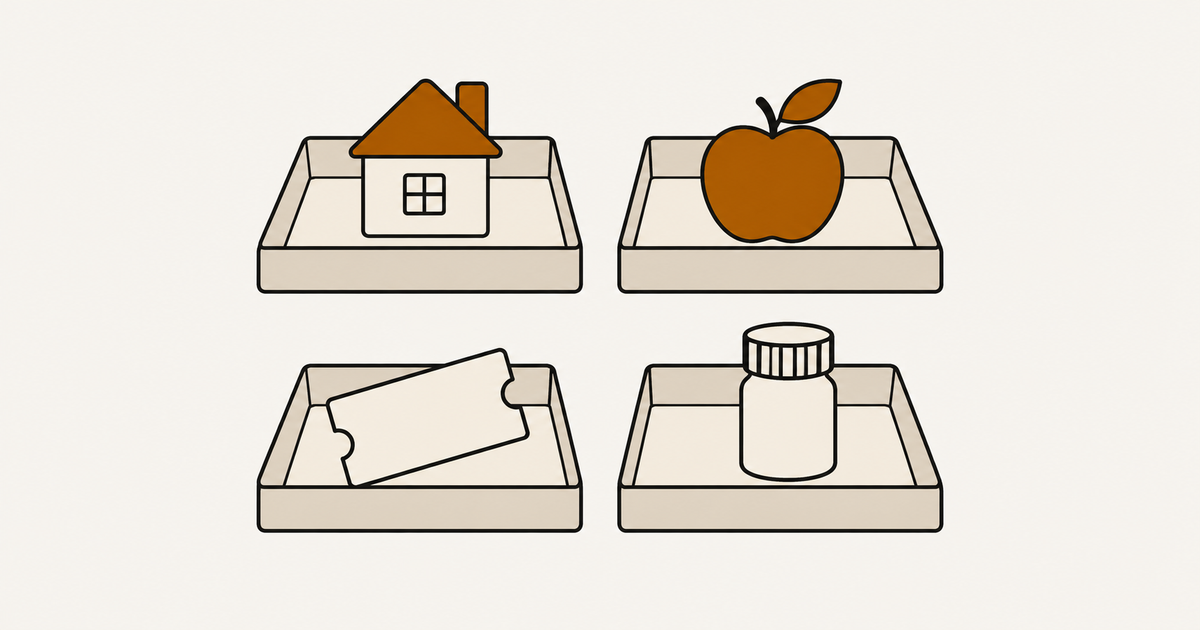
Choose a small, clear category list, handle mixed purchases, and check whether a new category will answer a useful question.
Choose expense categories according to the questions you want your spending record to answer. Start with broad purposes such as groceries, eating out, transport, bills, health, and other purchases. Write one sentence explaining what belongs in each. Split a category only when the extra detail will change a decision you plan to make.
Choose a purpose before choosing a label
A category answers what the money bought. The shop name answers where you paid, and cash or card answers how you paid. Keep those ideas separate. A supermarket can sell vegetables, batteries, and a birthday present. Calling all three purchases by the shop name hides the distinction you wanted to measure.
The CFPB spending worksheet separates groceries, eating out, and household supplies. You can borrow that distinction without copying every column. For your own notebook, decide whether you want to know the cost of food at home or the cost of everything you bring home from the supermarket. Both questions are usable, but they need different rules.
Start with a list that matches your life
Try groceries for food brought home, eating out for prepared meals bought out, transport for journeys, bills for household services, health for care and medicines, and shopping for other goods. Add a separate family or education category if you want to follow those purchases. This is a suggested starting list, not a standard you must meet.
Keep a short description beside ambiguous labels. For example, define transport as tickets, fuel, and parking, and say where a bicycle repair goes. If someone else records household purchases, ask them to classify a few sample entries. A disagreement reveals a rule you need to write down, rather than a person who has recorded something incorrectly.
Work through a mixed purchase
Suppose an illustrative supermarket payment is 48 euros. Food costs 32 euros, cleaning products cost 10 euros, and a gift costs 6 euros. If your question concerns food spending, record 32 under groceries, 10 under household supplies, and 6 under gifts or your chosen shopping category. The check is 32 + 10 + 6 = 48 euros.
Do not also retain a separate expense of 48 euros for the same basket. That would make recorded spending 96 euros. Keep the store name in the descriptions if it helps you connect the parts. Our guide to grocery spending explains how to retain useful basket detail without writing a separate entry for every apple.
If you only know the total, record that total once with a description saying the basket was mixed. Do not invent the split. You can improve the category later if you find the receipt. An honest broad entry is more useful than precise-looking numbers made up after the purchase.
Separate category, timing, and priority
A category does not tell you whether a purchase is regular or essential. A bus ticket and an occasional taxi can both be transport. A monthly entertainment subscription is regular, but its schedule does not decide its priority. Keep those questions in a separate review rather than creating categories such as regular-essential-transport and occasional-optional-transport.
For a difficult decision, use the needs and wants guide to describe the reason for the purchase. You can put that explanation in a separate note. You do not need a new category every time the same kind of purchase has a different purpose.
A checklist before adding another category
- Name the question the new category will answer, such as how much you spend on lunches bought near work.
- Give it a boundary that you can apply to the next purchase without a long debate.
- Decide which existing category will lose those entries, so you do not count the same spending twice.
- Check that you will actually use the separate total before adding more recording work.
- Keep an other category for genuine exceptions, with descriptions that let you revisit them.
Keep comparisons honest when labels change
Do not interpret a lower groceries total as a spending reduction if you have just moved cleaning products elsewhere. In a separate note, record when the rule changed. For a fair comparison, either apply the same rule to the earlier entries or compare only the period recorded under the new rule.
At your next monthly review, inspect the categories that caused hesitation. Merge labels that answer the same question. Split a broad label only if you can name the detail you were missing. The aim is a list you can apply consistently to real purchases, including the untidy ones.
Sources
Related reading

Needs and wants: how to classify the difficult purchases
Judge a purchase by its purpose and realistic alternatives. Work through mixed costs without calling every regular payment essential.
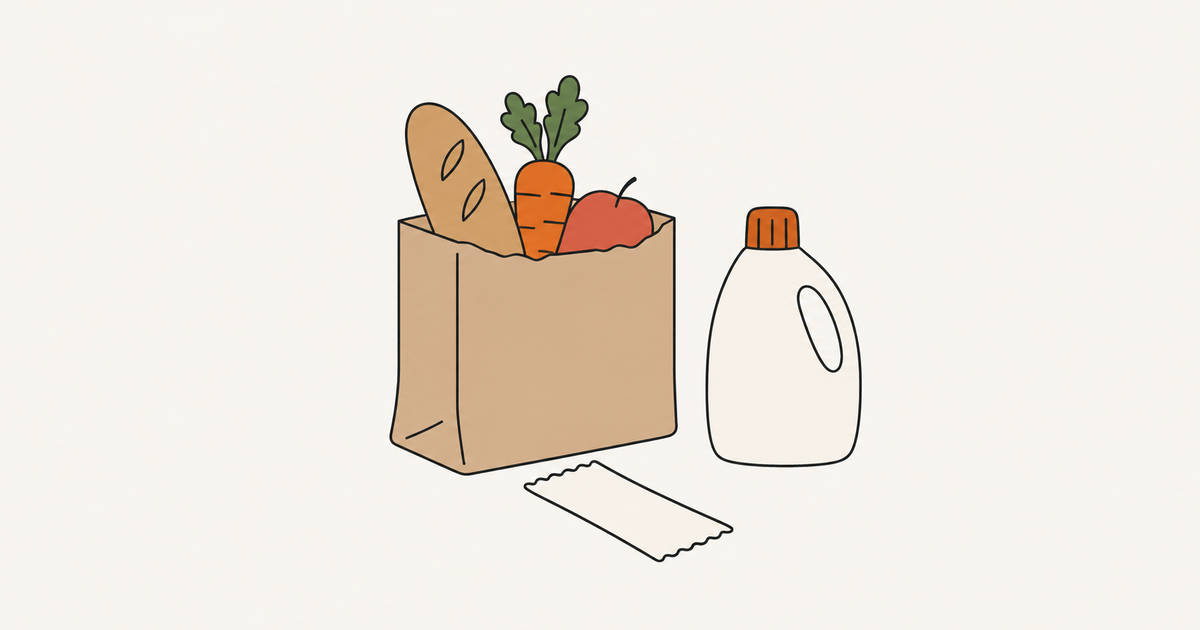
How to track grocery spending when the basket contains more than food
Separate food from household goods, include small top-up trips, and check that the parts still match what you paid.