How to plan for annual and irregular expenses

Prepare for known non-monthly bills using due dates and existing reserves. Keep planned savings separate from the purchase you eventually record.
To plan for an annual or irregular expense, estimate the bill, subtract money already reserved for it and divide the gap by the saving opportunities before payment. Keep that reserve in a separate planning record. Record the actual purchase when you pay it. Moving money aside each month does not mean you bought part of the service each month.
This method suits a known cost that does not arrive with your ordinary monthly bills. Examples include an annual membership, a planned course or a seasonal school purchase. You can use a paper list or free spreadsheet without buying another budgeting tool.
Distinguish a known cost from a surprise
A recurring date and an uncertain amount can still be planned. You may know that school supplies are needed before term begins without knowing their final price. Start with a dated estimate and replace it when you have a quote or shopping list. Write the assumptions so the number does not look more certain than it is.
MoneyHelper describes sinking funds as money put aside for known upcoming costs. The CFPB defines emergency savings around unplanned expenses and financial shocks. Use those distinctions to keep a predictable annual renewal separate from a sudden loss of income. Neither definition determines the amount your household can afford to save.
Ordinary monthly rent or phone payments belong in monthly cash-flow planning. They are not annual sinking funds just because they repeat. An annual bill paid in one instalment needs a different plan from a service actually billed every month.
Build a dated list before dividing amounts
Write each expected cost, its currency, the payment date and the amount already kept for it. Look beyond a single recent statement, because an annual payment may be absent from it. Include only commitments you expect to keep. Mark an optional purchase as optional rather than treating it like a required bill.
Count saving opportunities before the due date. If a payment is due before payday, that payday cannot fund it. When several bills fall together, calculate each gap first and then check whether their combined contributions fit the monthly plan. Setting up your first monthly budget gives those contributions a place beside other allocations.
Calculate the first cycle and the next one
Here is an original euro illustration, not local prices or recommended limits. A 720 euro annual bill is due after six more monthly saving opportunities. You already have 180 euros reserved. The remaining target is 540 euros. Dividing 540 by six gives a contribution of 90 euros each month.
Dividing 720 by twelve would give 60 euros, but that would be too little for this first deadline. Six contributions of 60 plus the existing 180 would produce only 540 euros, leaving a 180 euro shortfall. After paying the bill, a fresh twelve-month cycle at the same price would require 60 euros a month, assuming no reserve remains.
Suppose a separate 240 euro course is due after four saving opportunities with nothing reserved. It needs 60 euros each time. For the first four months, the two plans require 150 euros monthly in total. Check that combined amount against income and other commitments before promising both payments.
Keep reserves and purchases in separate records
In the reserve worksheet, start the annual bill at 180 euros and add the six contributions of 90. The balance reaches 720 euros. When you pay the provider, reduce the reserve by 720 and record a single 720 euro expense on the payment date.
Do not enter the 540 euros of contributions as purchases and then add the 720 euro bill to the same spending total. That would report 1,260 euros for one 720 euro purchase. A transfer between your own accounts also does not create income. Keep transfer tracking in the reserve or cash worksheet, with the actual payment in the expense notebook.
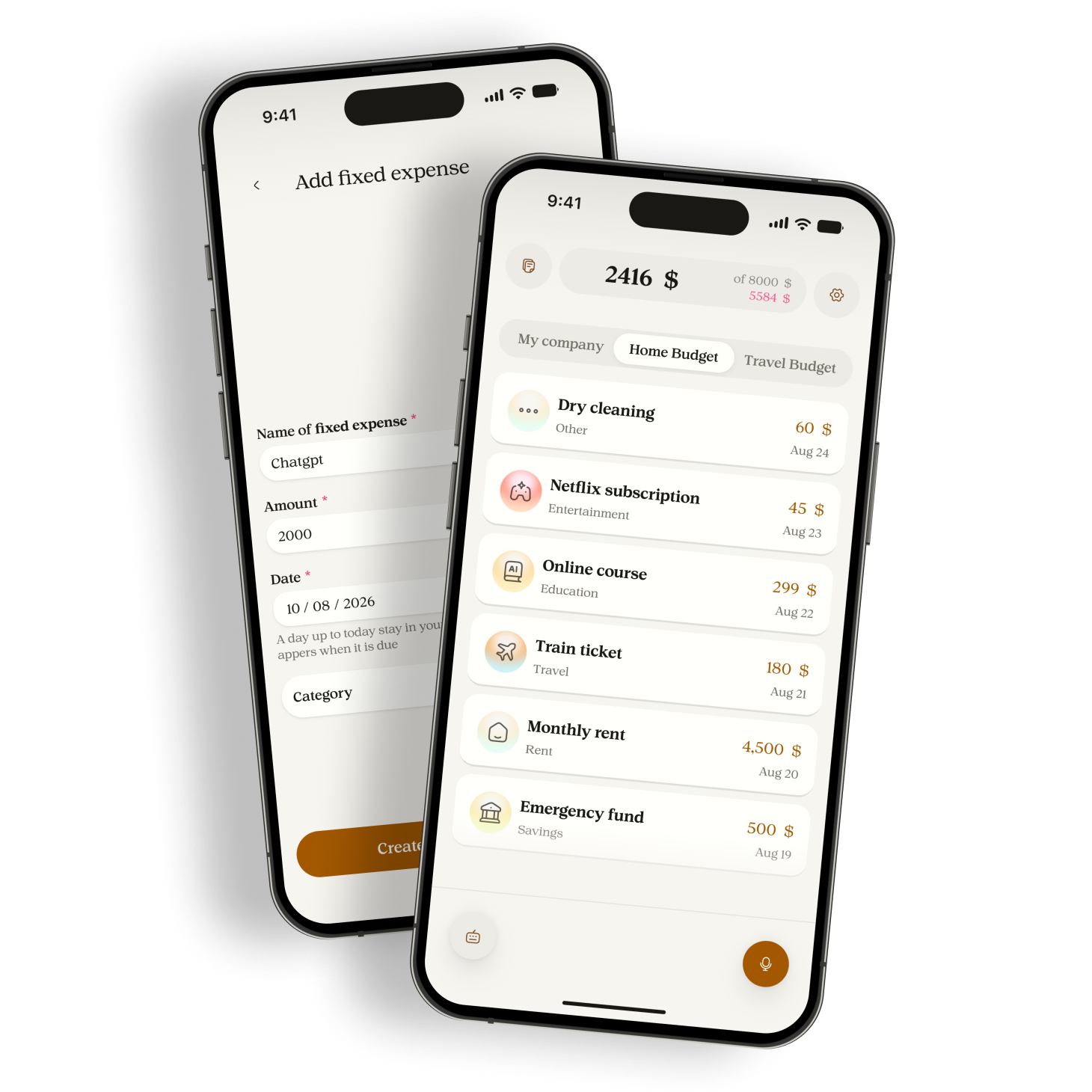
Manor's fixed templates create monthly expense entries. The Free plan allows two monthly recurring templates. They are not annual or weekly schedules and do not manage a savings reserve. Keep this reserve plan outside the app. If a scheduled entry already represents a real monthly bill, check it before adding that payment manually.
Respond when the saving target does not fit
If a quote rises or a contribution is missed, recalculate the remaining gap over the opportunities left. Do not erase the missed amount by extending the deadline beyond the actual bill. For an optional purchase, changing the date or scope may be possible. For a required payment, verify the provider's available arrangements before relying on a different schedule.
The guide to your remaining budget helps keep reserved money out of an assumed spending surplus. A subscription checklist is useful for finding the exact renewal date and the channel that holds the contract.
Check each planned reserve
- Verify the amount, currency and payment date against a record or estimate.
- Deduct only money still available and reserved for that cost.
- Count contributions that can arrive before payment, including the first deadline.
- Check the combined saving requirement against the rest of the monthly plan.
- Record the eventual purchase once and update the remaining reserve afterward.
Sources
Related reading
How to set up your first monthly budget
Build a first monthly budget with income, bills, everyday spending and future costs. Use a worked example and a setup checklist.
What your remaining budget actually tells you
Separate your recorded spending allowance from money available for bills. A worked example shows how to check commitments without double counting.