How to set up your first monthly budget
Build a first monthly budget with income, bills, everyday spending and future costs. Use a worked example and a setup checklist.
To set up your first monthly budget, choose a month, write down the income you expect to receive, and assign that money to bills, everyday purchases and money you need to keep for later. Use recent records to estimate amounts. A spending limit becomes useful when you can explain what it covers and how you will pay the commitments outside it.
You can do this with paper or a free spreadsheet. Keep the plan beside your expense record, with separate columns for planned and paid amounts. The first task is to make a workable starting plan. You do not need a finished month of tracking before writing the first version.
Choose the period and the people covered
Write the first and last date of the month. Decide whether the figures cover you alone or your household. If a partner pays part of the rent directly, show your share in a personal plan. Do not combine the full household rent with only your own income and then treat the result as a household budget.
Use one currency throughout each calculation. Keep a separate plan for spending in another currency unless you have a documented conversion method. Name that scope at the top of your sheet so later totals answer the same question.
Gather money you can reasonably expect
Collect payslips, bills and recent purchase records. The FTC's beginner budget guide starts with these records before subtracting expenses from income. Use take-home income rather than a salary figure that includes deductions you never receive.
Write expected receipt dates beside income. If freelance work varies, mark an uncertain payment separately instead of using it to fund a bill due tomorrow. A monthly average can help with planning, but it does not make late income available earlier. Avoid counting an opening bank balance as fresh income every month.
Give each planned amount a clear job
List required bills with their dates. Then estimate everyday spending using receipts or statements. If you lack a complete history, label the estimate and keep it small enough to inspect. Do not describe ten days of groceries as a whole month's actual spending.
Separate future reserves from purchases. Setting money aside for annual school costs belongs in the plan, while the eventual payment belongs in the expense record. The Finances & Pédagogie worksheet distinguishes current spending, occasional costs and savings. Its categories are a planning aid, not a requirement to create many categories in an app.
If your labels overlap, choose a small set of expense categories before allocating money. A meal should not move between groceries and leisure simply because one allowance is nearly used up.
Work through one complete starting plan
Here is an original illustration in euros, not local prices or suitable spending limits. Suppose expected take-home income is 2,100 euros. Plan 900 for rent, 180 for utilities and phone, 320 for groceries, 100 for transport, 80 for other required payments and 120 for flexible purchases.
Those planned payments total 1,700 euros. Assign another 150 to known future bills and 100 to emergency savings. Total allocations are 1,950 euros, leaving 150 unassigned. The calculation is 2,100 minus 1,700 minus 150 minus 100, which equals 150. This spare amount is a planning margin, not a target you must spend.
If a bill arrives before payday, check the opening cash available for that date. A positive monthly total cannot pay an early bill by itself. If the plan exceeds income, change a specific amount or timing assumption. Renaming the shortfall as savings does not solve it.
Set a recording limit with the same scope
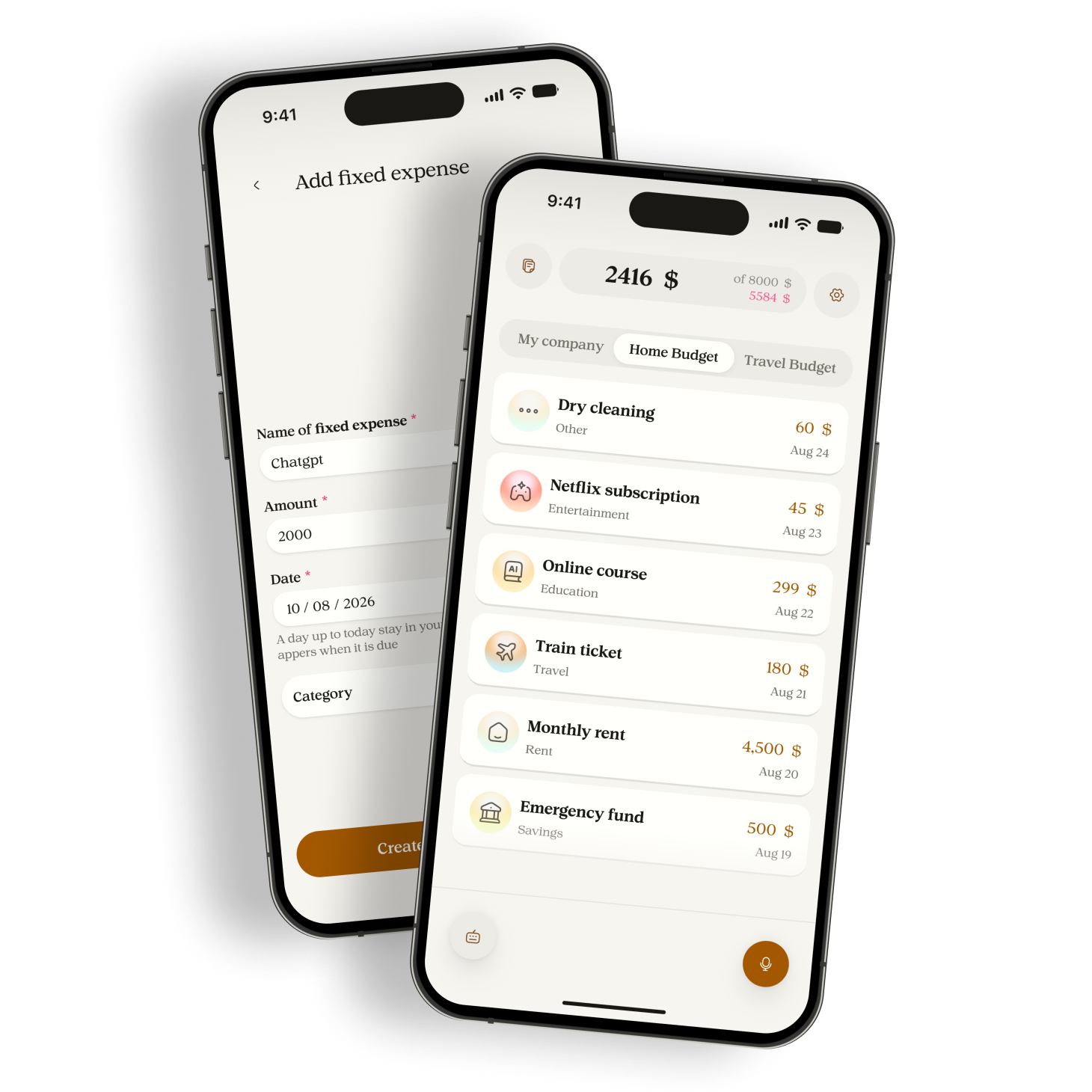
If you use Manor, a monthly limit belongs to the selected budget and month. Free allows one owned budget and three custom categories. A simple setup can use a separate paper plan for income and future reserves, with the app used for the expenses you record. Do not treat its limit as your bank balance.
Decide whether your recording limit includes rent and other fixed costs or only everyday spending. Then include the same costs in the recorded total. The guide to understanding your remaining budget explains why a recorded allowance cannot tell you whether all future bills are covered.
Check the plan before your first purchase
- Write the month, people covered and currency beside the totals.
- Match each required payment to an amount and a due date.
- Mark estimates and uncertain income so they remain visible.
- Keep planned reserves separate from actual purchases and avoid counting transfers twice.
- Confirm that every allocation fits the expected resources, then check the cash needed before the next payday.
Save this starting version with its date. Record purchases against it and correct assumptions when facts change. Planning for irregular expenses helps when the next cost is annual rather than monthly. Your first budget is ready when its numbers add up and you know which amounts still need evidence.
Sources
Related reading
How to plan for annual and irregular expenses
Prepare for known non-monthly bills using due dates and existing reserves. Keep planned savings separate from the purchase you eventually record.
What your remaining budget actually tells you
Separate your recorded spending allowance from money available for bills. A worked example shows how to check commitments without double counting.