What your remaining budget actually tells you
Separate your recorded spending allowance from money available for bills. A worked example shows how to check commitments without double counting.
Your remaining budget is the limit for a defined period minus the spending recorded against it. It tells you how much of that allowance is unused in the record. It does not establish how much money is in your account, whether every purchase is recorded or whether future bills are covered. Before another purchase, check both the allowance and the money needed before your next income arrives.
These are different calculations, so keep them on separate lines. A person can have room under a grocery limit while lacking cash for rent. Another person can have savings in the bank while having already used the month's chosen leisure allowance.
Identify what the displayed number covers
Start with the selected month, currency and people included. Then read the limit and the recorded total for that same scope. A whole-household limit compared with only your own purchases produces a misleading remainder. So does comparing the first half of a month with the complete month's expected costs without acknowledging the dates.
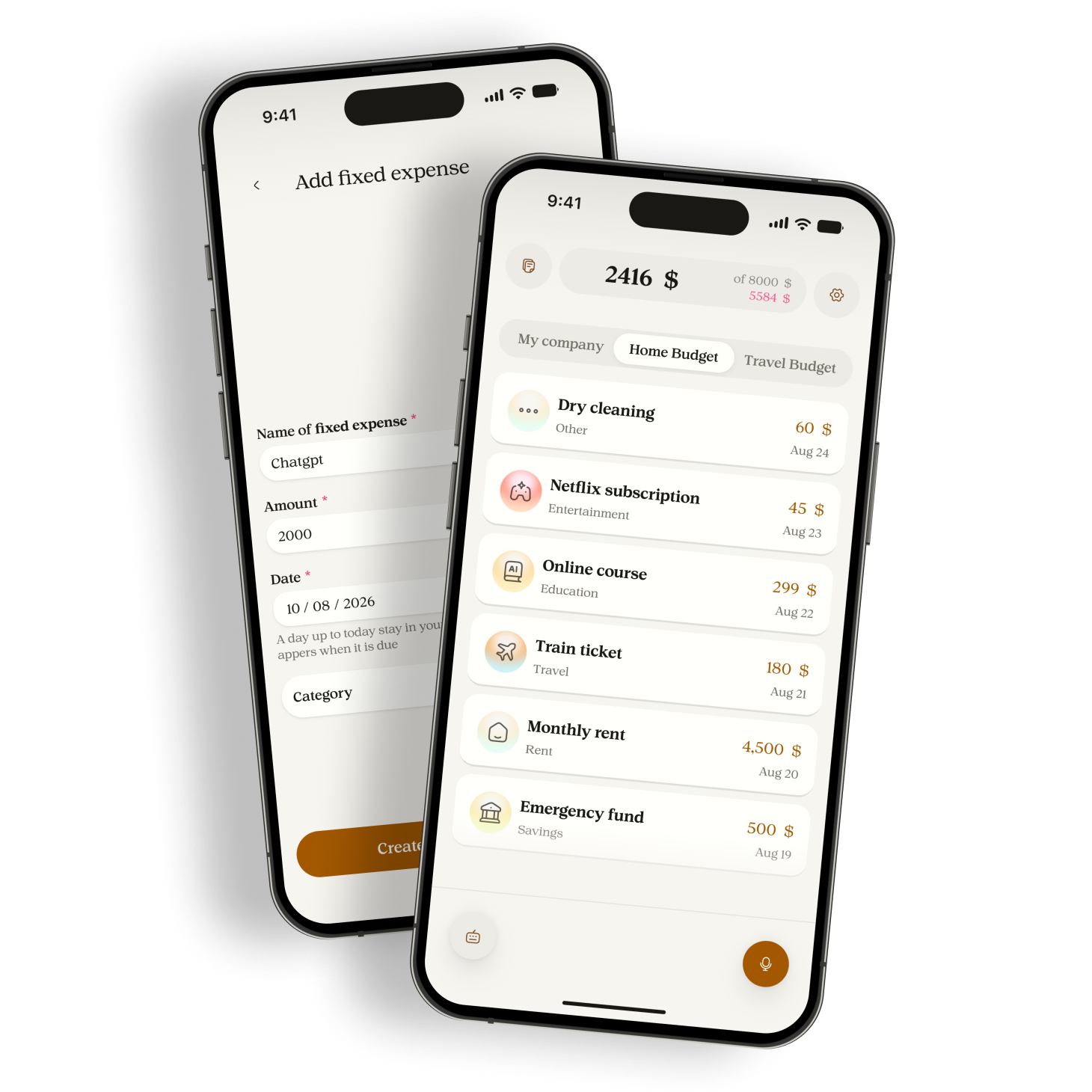
In Manor, the remaining calculation subtracts recorded spending from the month's limit. If that month has no limit, set one before interpreting a remainder. This is an expense record, not a bank connection. A monthly fixed entry may enter the record on its scheduled date, but its presence is not proof that a provider successfully collected the payment.
Calculate the recorded allowance first
Here is an original illustration in euros, not local prices or recommended limits. A household sets an everyday spending limit of 800 euros. It has recorded 470 euros. Its remaining recorded allowance is 330 euros, because 800 minus 470 equals 330.
The household still expects 140 euros of groceries, 60 of transport and a 30 euro payment that belongs within this same allowance. Those commitments total 230 euros. After allowing for them, the plan has 100 euros of unallocated room. This second figure is 330 minus 230, not another bank balance.
Only subtract commitments that are still outside the 470 already recorded. If the 30 euro payment is already in that total through a fixed entry, subtracting it again would count it twice. Check the individual record before adjusting the worksheet. Planning for irregular expenses explains how to keep annual reserves separate from payments as well.
Check money available on the relevant dates
Now make a separate cash calculation. Suppose the household has verified 520 euros of spendable cash across the accounts and cash it is including. It has already accounted for pending payments in that starting figure. Before its next income, it owes 250 euros of rent outside the everyday allowance, expects the 230 euros of costs above and wants to retain a 40 euro cushion.
Those needs total 520 euros. The cash check leaves zero, although the everyday spending plan still had 100 euros of room. The rent did not reduce that particular allowance because it was outside its scope. It still needs real money. Do not combine the two remainders or subtract the earlier 470 from the current cash figure again.
The CFPB cash-flow worksheet tracks income and expenses by week. That approach helps you test an upcoming date rather than assume a positive month-end forecast covers every bill today. Count expected income separately until its arrival is reliable, and do not treat an overdraft or credit limit as income.
Resolve a surprising remainder before changing the limit
If the number seems too generous, inspect missing purchases, dates and currency. An unrecorded cash purchase leaves the allowance overstated. If the number seems too low, check duplicates or a purchase outside the chosen scope. The guide to a short weekly spending check helps you find recent omissions without turning this into a full month-end review.
A negative remainder means recorded spending exceeds the chosen limit. It does not measure your debt. A positive remainder does not prove that a new purchase is affordable. The Finances & Pédagogie planning sheet keeps forecasts distinct from actual figures, a useful discipline when your estimates change during the month.
If you raise a limit, record why and identify the resources behind the change. Raising 800 to 900 increases the displayed allowance by 100, but creates no cash. If a needed payment no longer fits, adjust the plan using verified amounts and dates.
Use this check before an optional purchase
- Confirm the month, currency and scope of the allowance.
- Check that recent purchases appear once, including any scheduled monthly entry.
- List costs still to come within that allowance, excluding amounts already counted.
- Separately compare actual available money with commitments due before the next income.
- Keep reserved money and uncertain income visible instead of treating either as spare cash.
If you cannot explain the limit itself, return to setting up your first monthly budget. Keep today's figures with their date. The useful result is a recorded allowance you can explain and a separate cash check that includes the next obligations.
Sources
Related reading

How to set up your first monthly budget
Build a first monthly budget with income, bills, everyday spending and future costs. Use a worked example and a setup checklist.
Run a weekly spending check for omissions and upcoming bills
Check seven days of purchases, correct missing entries, and list bills due before your next review without rebuilding your whole monthly budget.