How to record a purchase when the receipt is missing

Keep the facts you know, mark uncertain details separately, and correct the same entry when better information appears.
If a receipt is missing, record the facts you still know about the purchase and keep uncertain details in a separate note. A known payment amount can go into your personal spending record even if the item breakdown is unavailable. If you do not know the amount, leave a reminder to investigate rather than inventing a precise entry that you may later mistake for a confirmed purchase.
Decide which part is actually missing
A missing paper receipt does not necessarily mean that every fact is unknown. You may remember the purchase and have an order confirmation showing the amount. Or you may know you paid a shop but no longer remember the basket contents. Separate the payment amount, date, seller, purchased items, and currency before deciding what can be recorded.
The CFPB spending tracker guidance says to write down the amount and purchase when you do not receive a receipt. For your own record, add where those facts came from. A note saying amount checked against order confirmation explains more than a note that simply says correct. Keep the original confirmation wherever you normally store purchase documents.
Reconstruct facts without filling the gaps
Check the records already available to you, such as an order email, a retailer account, a payment record you can view yourself, or a message exchanged at the time. Compare the seller and amount with the purchase you remember. Do not assume that two similar amounts describe the same purchase, or that a later payment-record date is the date you bought the item.
If you need the original item detail, you can ask the seller whether a copy is available. The answer may depend on what records they can find. Meanwhile, keep your personal entry limited to the known facts. A payment total alone does not establish how much of a mixed basket was food, cleaning products, or a present.
A known card amount and an uncertain split
Suppose you remember spending about 25 euros at a shop. You then check a matching payment record and confirm 24.60 euros. The difference is 25.00 minus 24.60, which equals 0.40 euros. If you had kept 25 euros only as a reminder, use the confirmed 24.60 euros for the expense. If you already recorded it, correct that entry.
Do not add 24.60 euros as another purchase beside the estimated 25 euros. That would show 49.60 euros for one payment. Keep any explanation of the change in your separate notes. These amounts are illustrative. They do not imply a particular shop price or that an app has verified a card transaction for you.
If you know the payment covered several types of goods but cannot recover their prices, retain the total once with a mixed-purchase description. The expense categories guide can help when you later recover the detail. Until then, do not assign invented amounts to make the category columns look complete.
When cash leaves an unexplained difference
Consider an illustrative wallet check. You started with 80 euros and ended with 29 euros, with no cash added or removed for any other reason. The decrease is 51 euros. You can identify purchases of 14 euros and 21 euros, totalling 35 euros. The remaining unexplained difference is 51 minus 35, which equals 16 euros.
That calculation does not tell you what the 16 euros bought. It also depends on your starting cash count being correct. Keep it as an unresolved difference in a separate reconciliation note while checking what happened. Do not label it groceries merely because you visited a food shop. The cash tracking guide explains how to distinguish spending from money moved into or out of a wallet.
Checklist for a missing receipt
- Search the notebook first, so a lost receipt does not become a duplicate purchase.
- Write the purchase date if known, the currency, and a description you can recognise later.
- Record the source of the amount in a separate note, such as memory, order email, or a manually checked payment record.
- Keep a confirmed total separate from an uncertain item breakdown.
- Set a specific next action for missing information, such as checking an order account or asking the seller.
- When new evidence appears, compare it with the existing entry before correcting or adding anything.
Keep a personal record separate from proof
A reconstructed note explains your own spending record. Do not present it as a receipt issued by the seller or as proof that another organisation must accept. If you need documents for work or another formal process, check that process's requirements with the responsible organisation. This method does not determine them.
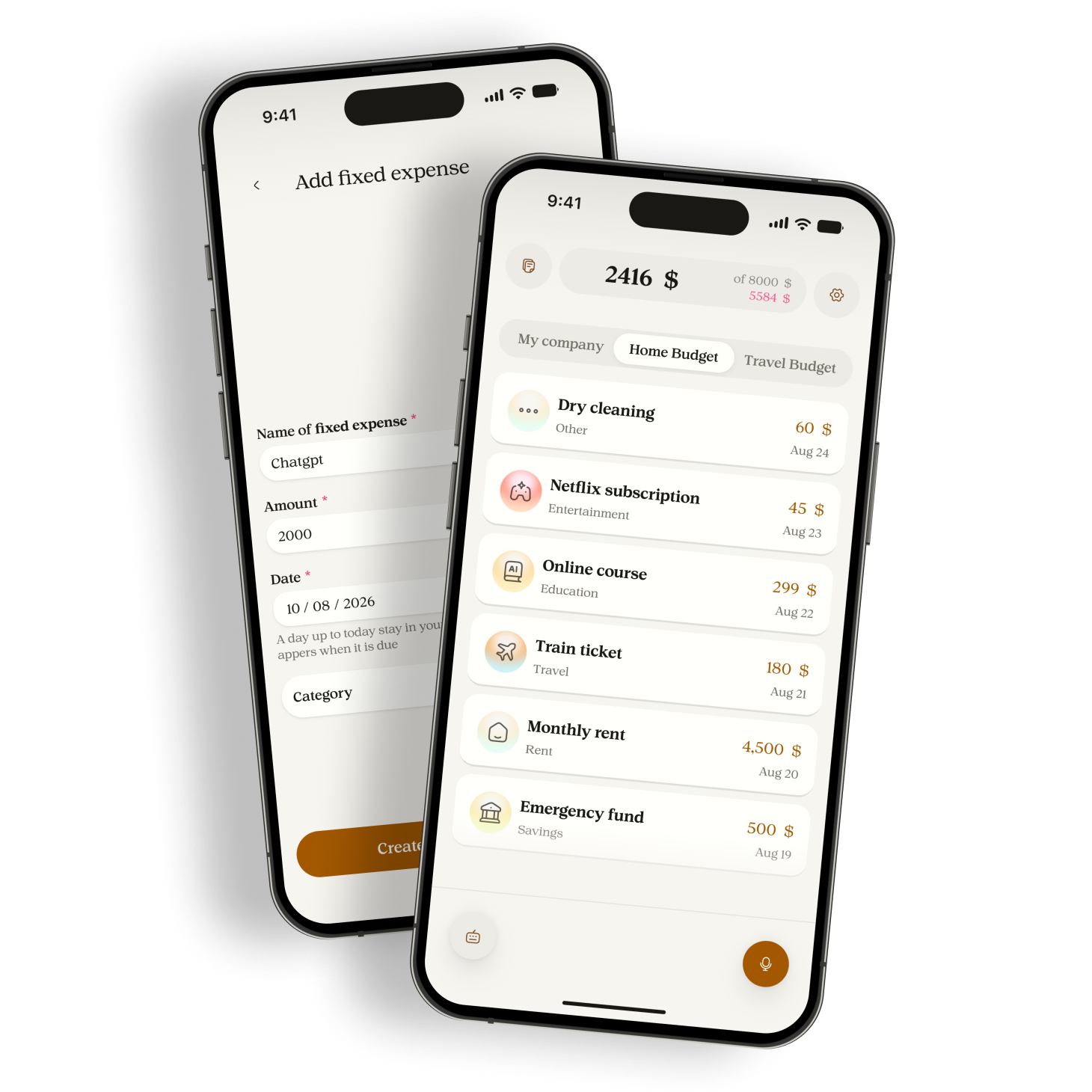
You can use a paper notebook, a spreadsheet, or Manor to record a known purchase. In Manor, speak or type the facts you have and review the result yourself. Keep the uncertainty note elsewhere if your recording tool does not have a suitable field. The useful result is a traceable amount and an explicit unanswered question, rather than a complete-looking record built from guesses.
Sources
Related reading

Find and correct duplicate expense entries
Check whether two entries describe one purchase before removing anything. A repeated amount is a reason to look, not proof of a duplicate.
How to choose expense categories you can keep using
Choose a small, clear category list, handle mixed purchases, and check whether a new category will answer a useful question.