Agree on rules for a shared household expense notebook

Decide what counts as shared spending, who records each purchase, and what stays private. Includes a free worksheet method and a worked example.
A shared household expense notebook works when everyone agrees what belongs in it, who records each purchase, and who can read the entries. Write those rules before collecting receipts. Keep personal spending outside the record unless its owner chooses otherwise. A spending total describes purchases. It does not decide what each person owes.
Agree on the purpose and the boundaries
Start with one question everyone wants to answer, such as how much the household spends on shared groceries and cleaning supplies. Roommates may want a narrower record than partners. Decide which costs belong, when the record starts, and whether guests' purchases count. Write down exclusions as well as inclusions, so nobody has to guess later.
A person can agree to record household groceries without agreeing to disclose medical purchases, gifts, or every bank transaction. Ask before adding another reader. Avoid bank passwords, full account numbers, and private conversations in shared notes. If someone wants to stop participating, agree how to finish the record without demanding new personal information.
MoneyHelper's guide to talking about money discusses shared goals and warns about control of someone's access to money against their wishes. Use the conversation to agree on the notebook's scope. This guide does not set legal duties or prescribe how partners should divide costs in any country.
Choose a free record everyone can inspect
Use a paper sheet or a free spreadsheet you already have access to. Give each purchase a date, description, amount, currency, payer, and a short reference such as a receipt date. Name a recorder for each purchase. Usually the payer records it, but the group can choose someone else if everyone agrees.
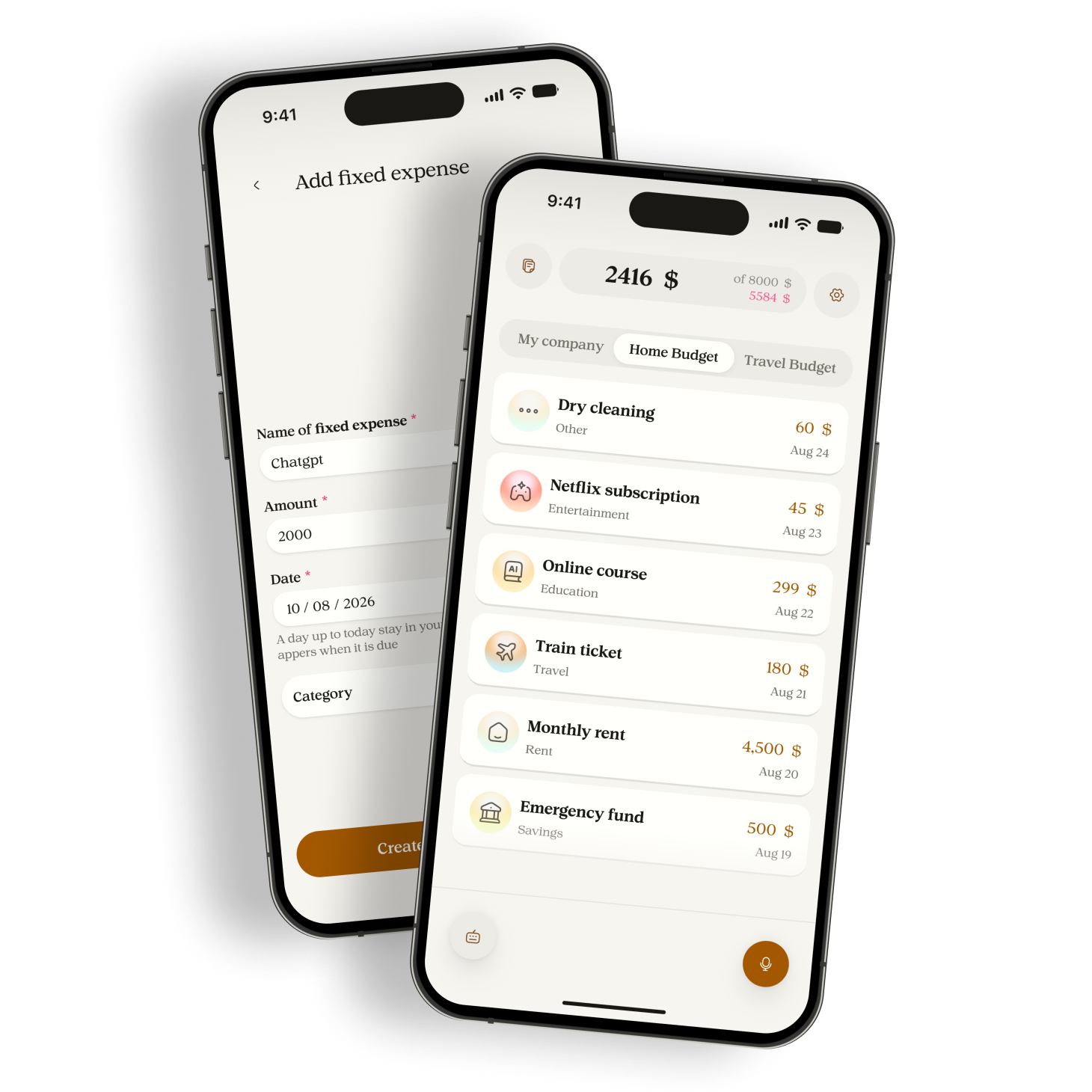
Manor can hold your own recorded or typed expenses. Its Free plan permits one owned budget. In-app household sharing requires a Premium owner, so the free method here uses an external shared sheet. Do not exchange account logins to imitate sharing. If you copy your own entries into that sheet, check them and copy each purchase only once.
Choose labels people understand before adding more detail. The guide to expense categories explains how to keep category rules consistent. A payer's initials can be enough for this external sheet. You do not need to publish their bank balance or attach an entire statement.
Work through an agreed household example
Suppose two adults agree to record shared groceries and household supplies in euros. These amounts illustrate the method, not local prices or recommended limits. Alex buys groceries for 48 euros. Sam buys cleaning supplies for 12 euros. The shared purchase total is 48 + 12 = 60 euros. Each purchase appears once, under the person who paid.
Alex's separate personal lunch costs 9 euros and stays outside the agreed record. If the group voluntarily chooses equal contributions for these particular shared purchases, half of 60 is 30 euros. Alex paid 18 euros more than that share, and Sam paid 18 euros less. That calculation follows their example agreement, not a universal rule of fairness.
If Sam later transfers 18 euros to Alex, note the transfer separately in the external sheet. The household still bought 60 euros of goods. Adding the transfer as a purchase would produce a false total of 78 euros. Manor does not automatically split bills or settle this difference. Any payment decision remains with the participants.
Check the agreement before using it
- Write one sentence naming the shared purpose, the start date, and the currency. List the purchases everyone has agreed to include.
- Confirm who can read the sheet and what information stays private. Ask again before adding a new participant or a new type of expense.
- Choose who records each purchase and how a second person checks it. Keep the original receipt reference so two similar purchases are distinguishable.
- Decide how to handle mixed personal and shared receipts. Record only the agreed shared portion, and keep its arithmetic visible.
- Keep reimbursements apart from purchase totals. Agree a date to check omissions and a way to pause or change the arrangement.
Review missing entries without judging the payer
At the next weekly spending check, ask whether any agreed purchase is missing or duplicated. Compare dates and descriptions before changing a number. Do not treat an unusual amount as proof that someone broke an agreement. Ask the person who recorded it, and leave an unresolved question visible rather than inventing an answer.
If you use voice notes for your own record, read the guide to voice expense privacy before speaking about other household members. Sharing the cost of a purchase does not make every detail about it public. Keep only the information the participants need to understand the agreed total.
Sources
Related reading

Run a weekly spending check for omissions and upcoming bills
Check seven days of purchases, correct missing entries, and list bills due before your next review without rebuilding your whole monthly budget.

What to check before recording expenses by voice
Know what leaves your phone, what Manor retains, and which purchase details you can omit before recording or typing an expense.